

Widow and Widower Support Groups Near Me: How to Find the Right Community
You have typed "widow and widower support groups near me" into your phone, probably late, probably more than once, and then put the phone down. Not because you did not want the room. Because you could not picture yourself in it.
This guide is written for the first year after your husband, wife, or partner died. If you are further along, it still holds.
Widow and widower support groups near you are run by hospices, faith communities, and nonprofits such as Soaring Spirits International and Modern Widows Club. Most are free or low cost, most let you join at any point, and the fastest ways to find one are your local hospice, GriefShare's group finder, and dialing 211.
The rest of this page covers what nobody writes down: what each kind of group is like, which one fits, and what happens in the first hour.
What You Are Really Looking For
Somewhere around month two or three, you learned to answer "how are you doing" with "taking it a day at a time," because the true answer made people's faces change.
That change has a name in this article: the flinch. It is small and not unkind, and after enough of them you stop telling the truth.
A good widows and widowers group is a room where nobody flinches. You can say you still talk to him in the car, that some days you feel relief and then hate yourself for it, that you cannot remember her face without a photo. Someone across the room will nod.
The Holmes and Rahe Social Readjustment Rating Scale, published in 1967, ranks the death of a spouse as the single most stressful common life event. Wanting a room full of people who carry the same thing is not weakness. It is sense.
The Five Kinds of Widow and Widower Support Groups Near Me
Hospice bereavement groups. Under Medicare's hospice rules, every certified hospice in the United States must make bereavement services available for up to a year after a death, and many run open grief groups for the wider community whether or not your person died in their care. Usually free, led by a bereavement coordinator, and often the most reliable loss of spouse support group in town. Ask whether they run a spouse-specific circle.
Faith-based programs. GriefShare is the largest: a Christian ministry running a 13-week video-and-discussion cycle at thousands of church locations and online, joinable at any point, with a small workbook fee. If a faith framework is a comfort, it is a warm option. If not, you will know within one session.
Widow and widower social groups. This is what searches for social groups for widows and widowers near me are usually hoping to find, and most people do not know it exists. Soaring Spirits International runs volunteer-led Regional Social Groups that meet twice a month in public places, with no curriculum and one aim: rebuilding a social life alongside people who understand. Modern Widows Club runs local and virtual communities for anyone who considers herself widowed. A widow and widowers social group is not where you go to cry. It is where you go to dinner with people who will not ask how you are doing in that voice.
Online widows and widowers groups. Widowed Village, also run by Soaring Spirits, is a free online community open around the clock, and Modern Widows Club's virtual communities meet by video. For anyone rural, housebound, or not ready to be seen, these are real support for widows and widowers. We cover text-based options in a separate article on chat rooms for grieving widows.
Therapist-led grief groups. Directories such as Psychology Today list groups run by licensed clinicians, usually with a fee. These are clinical care rather than peer support, and the two do different jobs. If you are worried about how you are coping, start here.
Where to Find Widow and Widower Support Groups Near Me
- Call your nearest hospice and ask for the bereavement department. You need not have used their services. Ask whether they run a widows support group near me.
- Dial 211. Free and confidential, it finds local grief groups that never appear in a search engine.
- Use GriefShare's group finder at griefshare.org for in-person and online groups by zip code.
- Check Soaring Spirits' Regional Social Group listings and Modern Widows Club's community map for a social group nearby. Both also list social groups for widows and widowers near me that meet online.
- Ask a funeral director, a librarian, or your place of worship. Small local widow grief groups near me often run for years without a website.
Auré is not one of those local rooms and will not pretend to be. It is private, online, and open at the hours when no room is.
What a First Meeting Is Actually Like
Most people who search for widow grief groups near me never go, and the reason is not the group. It is the parking lot.
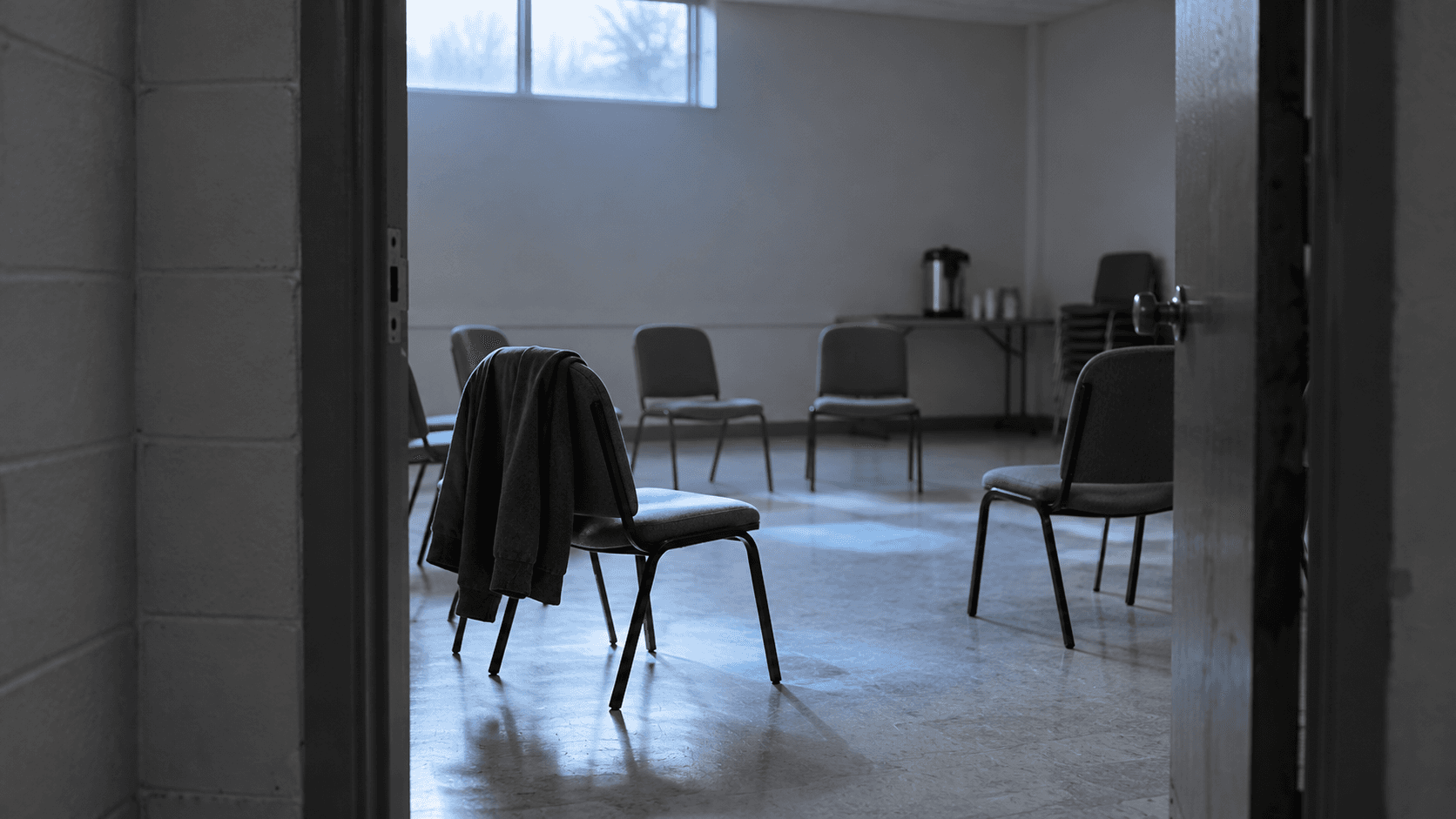
You will probably arrive early and sit in the car. Inside are chairs in a loose circle, bad coffee, and a box of tissues nobody makes a thing of.
The facilitator, usually widowed too, opens with something short. Then people say their first name and, if they want, who died and when. You can say your name and pass. In most rooms someone does every week.
A man will describe still sleeping on his own side of the bed eight months in. A woman will say she got angry at her husband last week for dying, then laugh, and the room will laugh with her. You may not say a word all hour and still leave lighter, because you spent sixty minutes without managing anyone.
The thing almost nobody tells you: you can leave before it ends. People do. They come back.
How to Tell Whether It Is the Right Group
The most important question is not which organization runs it. It is whether the people in it are at roughly your stage.
A widow of three weeks and a widow of three years are in different worlds. The first needs a room that can sit with shock. The second is often searching because everyone around her has moved along and she is still here. A support group for widows and widowers near me that mixes both can work; ask the facilitator how they handle it.
Signs this room is not yours, and that you should try another:
- Someone tells you what you "should" be feeling by now.
- The group treats the five stages as a checklist. Elisabeth Kübler-Ross built that model in 1969 from work with dying patients, not the people they left behind, and bereavement researchers have long argued it describes mourning poorly.
- One person's loss takes up every session.
- You feel pressure to be "over it."
What research offers instead is more forgiving. In 1999, Margaret Stroebe and Henk Schut described the dual process model: people move back and forth between facing the loss and stepping away into ordinary life, and both movements are necessary. A good day is not a betrayal. A good group knows this without the citation.
What Other People Will Say
You have already collected the sentences. The ones that begin with "at least." The friend who said it was time to start "moving on."
None of them are cruel. They are frightened of your grief and reaching for anything that makes it smaller. But each sentence costs you something, because you have to absorb it and smile.
This is the real case for a loss of spouse support group: the people in it have had the same sentences said to them, so they will not say them to you. In 1996, three bereavement researchers, Dennis Klass, Phyllis Silverman, and Steven Nickman, published Continuing Bonds, overturning the older idea that healthy grief means detaching from the person who died. Keeping a connection, they found, is normal and often healthy. In a good group you never have to defend that.
The Days Between Meetings
The honest limit of every group on this page: it meets on Tuesday. Grief does not.
The hospice circle is weekly. The social group is twice a month. Eleven days can pass, and in them there is the Sunday afternoon, the song in the grocery store, the 3am half-empty bed. This is where loneliness settles in; we wrote separately about the kind of emotional support that helps when you feel alone.
That gap is what Auré is built for. Auré is a private peer support platform for people going through relationship loss, including the death of a partner. It is not therapy and not a grief counselor. It begins with a private conversation at any hour, designed with input from psychiatrists, psychologists, and relationship specialists, and when you are ready it can connect you one to one with someone who has also lost a partner, or with a small group matched by shared experience, circumstance, and stage. That last word is the stage-matching this article has been describing, without waiting for a Tuesday.
If the weight of this ever tips into feeling you cannot go on, please talk to a doctor, a crisis line in your country, or someone you trust today. Peer support, including Auré, sits alongside that help. It does not replace it.
You Are Allowed to Walk In
Finding widow and widower support groups near me is not a project. It is one phone call, then a parking lot, then a door.
You are allowed to sit in the car twice before you go in. You are allowed to say your name and nothing else. You are allowed to want a room full of people who will not flinch.
Grief does not keep office hours. Auré is a private place to talk at 3am, and to connect with people who have lost a partner too, when you are ready. Download the app from the App Store or Google Play.
Are widow and widower support groups near me free?
Most are. Hospice bereavement groups, Soaring Spirits' Regional Social Groups, and Widowed Village are free. GriefShare charges a small workbook fee. Therapist-led groups charge per session. Free support for widows and widowers exists in almost every area; call 211 if cost is stopping you.
What is the difference between a widows support group near me and a social group?
A grief group meets to talk about the loss, usually with a facilitator. A widow and widowers social group meets to eat, walk, or see a film with people who understand, and runs no program. Many people use both: the grief group early on, the social group later.
How soon after my spouse died should I join a loss of spouse support group?
There is no right time, and no group will turn you away for being too early or too late. Some come in the first month. Others come at year two, when everyone else has stopped asking.
Do I have to talk at a widows and widowers group?
No. Saying your first name and passing is normal. Many people attend several sessions before they say anything about their loss, and nobody will single you out. Listening counts.
Is it wrong to laugh at a support group for widows and widowers near me?
No, and it happens in almost every meeting. Widowed people laugh together about things that would horrify outsiders, because they are the only ones who can. Laughter is part of ordinary life, and researchers describe grief as moving between the loss and ordinary life. It does not mean you loved them less.
Can I go to widow grief groups near me if we were not married?
Yes. Soaring Spirits uses a deliberately broad definition of widowed and welcomes anyone whose spouse or partner died. If the word "widow" does not fit you, our article on bereavement support is written for you.