

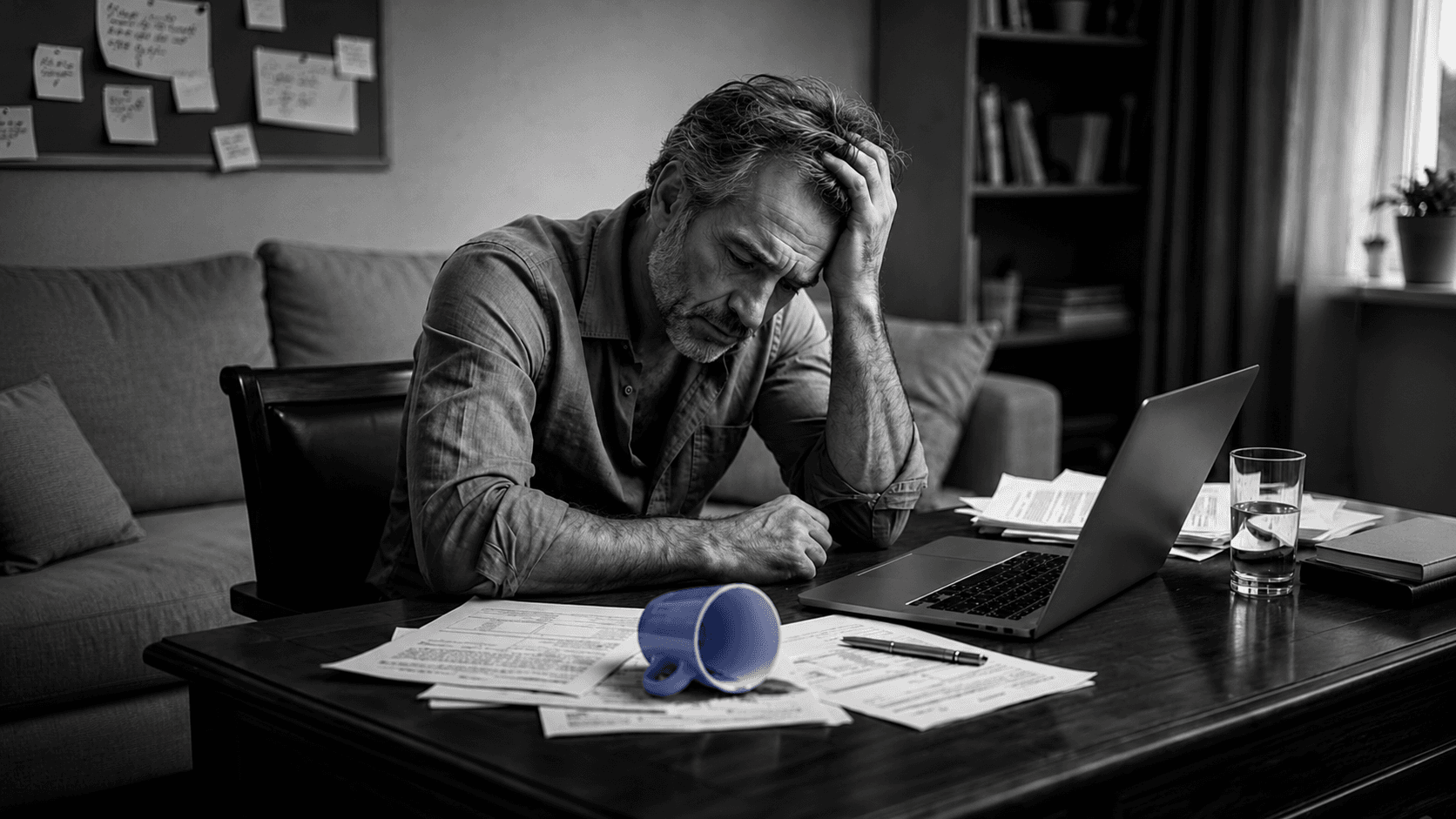
Stay or Leave After Infidelity: How to Decide
You found out, and now everyone from your sister to a stranger on the internet has an opinion about what you should do. The truth is simpler and harder: nobody else can tell you whether to stay or leave after infidelity, because nobody else has to live inside your marriage or your body.
If you're trying to decide whether to stay or leave after infidelity, know this first: you don't have to decide today, and changing your mind later isn't a failure. The decision usually comes in stages, not one dramatic moment. Give yourself permission to think it through in pieces: your safety, the pattern of what happened, whether there's real remorse, and what you can actually live with.
That single paragraph won't settle anything, and it isn't supposed to. What follows is a way to work through the stay or leave decision without pretending there's a formula that spits out the right answer.
Why the Stay or Leave Question Feels Impossible Right Now
Right after discovery, your nervous system is doing what it's built to do after a shock: scanning for danger, replaying details, struggling to sleep or eat normally. Researchers who study betrayal trauma have found that this kind of pain, especially when it comes from a romantic partner, is linked to more severe stress symptoms than betrayal from other sources, and that having steady, nonjudgmental support around you is one of the strongest protective factors during recovery (Tirone et al., 2021).
None of that is a diagnosis. It's a description of what a lot of people go through, and it's part of why trying to make a permanent decision about your marriage in week one so often backfires. Your thinking brain is trying to do a complex, long-term calculation while your body is still in an alarm state. That's not the moment for a final answer.
You Don't Have to Decide Whether to Stay or Leave Today
This might be the most useful sentence in this whole piece: the decision to stay or leave after infidelity is rarely made once. It's made and remade, sometimes daily, as new information surfaces, as the shock wears off, and as you see how your partner actually behaves over time, not just what they say in the first hard conversation.
A few things that are normal, even though they don't feel like it:
- Wanting to stay on Monday and wanting to leave by Wednesday.
- Needing separate space before you can even think about the stay or leave question clearly.
- Feeling embarrassed that you're still "not sure" months later.
- Making a temporary decision, like living separately while you figure things out, that isn't the same as a final one.
None of that means you're weak or that you're stringing yourself along. It means you're processing something that shook the ground you were standing on.
Questions That Actually Help You Decide Whether to Stay or Leave
Skip the generic "signs you should leave" list for a minute. Those lists assume every relationship and every affair look the same, and they don't. Instead, sit with these questions honestly, ideally with a pen in hand, and see what actually comes up for you.
Is this a pattern or a break from the pattern? One affair, however painful, is different from discovering this is the third time. A pattern usually points to something the other person hasn't been willing or able to change, no matter what they promise now.
Does your partner take real responsibility, or do they manage your reaction? Genuine accountability sounds like ownership without excuses. Managing your reaction sounds like minimizing, rushing you to "move on," or getting defensive when you ask hard questions.
Are you safe? Physically, financially, emotionally. If there's any threat, control, or intimidation involved, that changes the calculation entirely, and it's worth talking to a professional who specializes in relationship safety, not just working through this alone.
What would staying actually require of you? Not in theory, in practice. Would it mean years of rebuilding trust in small, repeated moments? Are you willing to do that work, or are you hoping the relationship can just skip to "normal"?
What would leaving actually require of you? Logistics, finances, kids, shared friends, starting over. Naming the real cost of leaving, not the fantasy version, helps you make a grounded choice instead of a reactive one.
Whose voice is loudest in your head right now: yours, or everyone else's? Family, friends, and the internet all have opinions about the stay or leave decision. This one has to be yours.
The table below is a way to hold a few of the biggest factors side by side, not to score them, but to see them clearly at the same time.
Factor
Worth asking yourself
Pattern
Is this a first betrayal, or one of several?
Remorse
Does my partner take ownership, or do they focus on managing how I feel?
Safety
Do I feel physically and emotionally safe, right now, as things stand?
Capacity
Do I have the time, support, and energy this would take, either way?
Values
Which choice, staying or leaving, actually fits who I want to be?
What Staying Can Look Like
Choosing to stay after infidelity doesn't mean pretending it didn't happen or rushing back to how things were. For most couples who make it through, staying means a slow rebuild: transparency that's offered, not extracted; consistent behavior over months, not a single grand gesture; and often, professional support to help both people understand what happened and how to prevent it from happening again.
It's worth knowing that staying is a common outcome, not a rare one. Research following couples after infidelity found that 57% of couples who disclosed the affair openly were still together five years later, compared with just 20% of couples where the affair stayed hidden and later came to light (Marín, Christensen & Atkins, 2014). Staying together isn't automatically the "weak" choice, and it isn't automatically the "strong" one either. It's one valid path, if it's chosen with clear eyes.
What Leaving Can Look Like
Choosing to leave after infidelity doesn't mean you failed to forgive enough, or that you're the reason the marriage ended. Sometimes leaving is the version of self-respect that fits the situation: repeated betrayal, no real accountability, or simply realizing that what you need to feel safe and valued isn't something this relationship can offer, whatever the reason.
Leaving is also rarely instant. It can look like a gradual separation, a trial period apart, or a slower emotional withdrawal before anything becomes official. There's no required timeline and no prize for leaving fast or staying long.
When It Isn't Really a Choice
Sometimes the stay or leave question gets complicated by something bigger than the affair itself: ongoing emotional or physical abuse, coercive control, or a partner who threatens you if you consider leaving. If any of that describes your situation, this isn't a "weigh the pros and cons" moment. Please reach out to a licensed professional, a domestic violence hotline, or someone trained in relationship safety who can help you think through next steps securely. If you are in immediate danger, contact local emergency services. Auré is a peer support companion, not a crisis or safety service, and situations like these deserve specialized help alongside anything else you're using for support.
Why People Change Their Mind, and Why That's Not Failure
It's common to announce you're leaving and then stay. It's just as common to say you're staying and then leave six months later. Neither means you were lying, to yourself or anyone else. New information changes things: how your partner responds over time, what your own needs turn out to be once the initial shock fades, what actually feels livable day to day.
If you find yourself flip-flopping, that's not a character flaw. It's what happens when you're trying to make a permanent decision about your life while you're still in the middle of processing something that upended it. Give the decision the time it actually needs, even if that's longer than the people around you are comfortable with.
If You're the One Who Cheated: Your Part in This Decision
If you're the wayward partner, you don't get to make the stay or leave decision for your partner, but you do have real influence over what they have to work with. That means being honest even when honesty is uncomfortable, answering questions without deflecting, and accepting that your partner needs time you can't rush, no matter how much you want resolution.
It also means being honest with yourself about whether you're ready to do the work reconciliation actually requires, not just the work of getting forgiven. Guilt and shame are common after an affair, and they're worth working through, ideally with support, so they don't quietly steer the relationship instead of your actual values.
Talking It Through Without Making It Permanent Yet
You don't need to have this figured out to talk about it. Sometimes what helps most isn't advice, it's a place to think out loud without someone rushing you toward an answer, at 2am when the thoughts won't stop or in the middle of an ordinary Tuesday when it hits you again out of nowhere.
You do not have to sit with this alone at 2am. Auré is a peer support companion for people healing from infidelity, built for both partners, whether you're trying to decide whether to stay or leave, or you've already decided and you're figuring out what comes next. Download the app from the App Store or Google Play.
How long should I wait before deciding whether to stay or leave after infidelity? There's no required timeline. Many people need weeks or months before the initial shock settles enough to think clearly, and it's common to make a temporary decision, like living apart for a while, before making a longer-term one.
Is it normal to keep changing my mind about staying or leaving? Yes. Going back and forth between staying and leaving is one of the most commonly reported experiences after discovery. It usually reflects new information and the natural process of working through shock, not indecisiveness or weakness.
Do most couples stay together after infidelity? Research suggests a majority of couples who openly disclose an affair remain together over the following years, though outcomes vary widely depending on factors like whether the betrayal was a pattern, whether there's genuine accountability, and how safe both partners feel moving forward (Marín, Christensen & Atkins, 2014).
What if my partner wants to stay but I'm not sure I do? Your partner's preference doesn't override your own timeline or needs. It's reasonable to ask for space, more information, or professional support before making any decision, and to say plainly that you're not ready to commit either way yet.
Does choosing to stay mean I'm forgiving too easily? No. Staying and forgiving are separate decisions, and neither one has to happen on anyone else's schedule. Some people stay while still working through anger or hurt for a long time, and that's a legitimate, common path.
When should I get professional help instead of just talking it through? If there's any physical danger, ongoing abuse, thoughts of self-harm, or a level of distress that's making daily functioning hard, it's important to reach out to a licensed therapist, doctor, or crisis line in addition to any peer support you're using. Auré complements professional care; it doesn't replace it.